
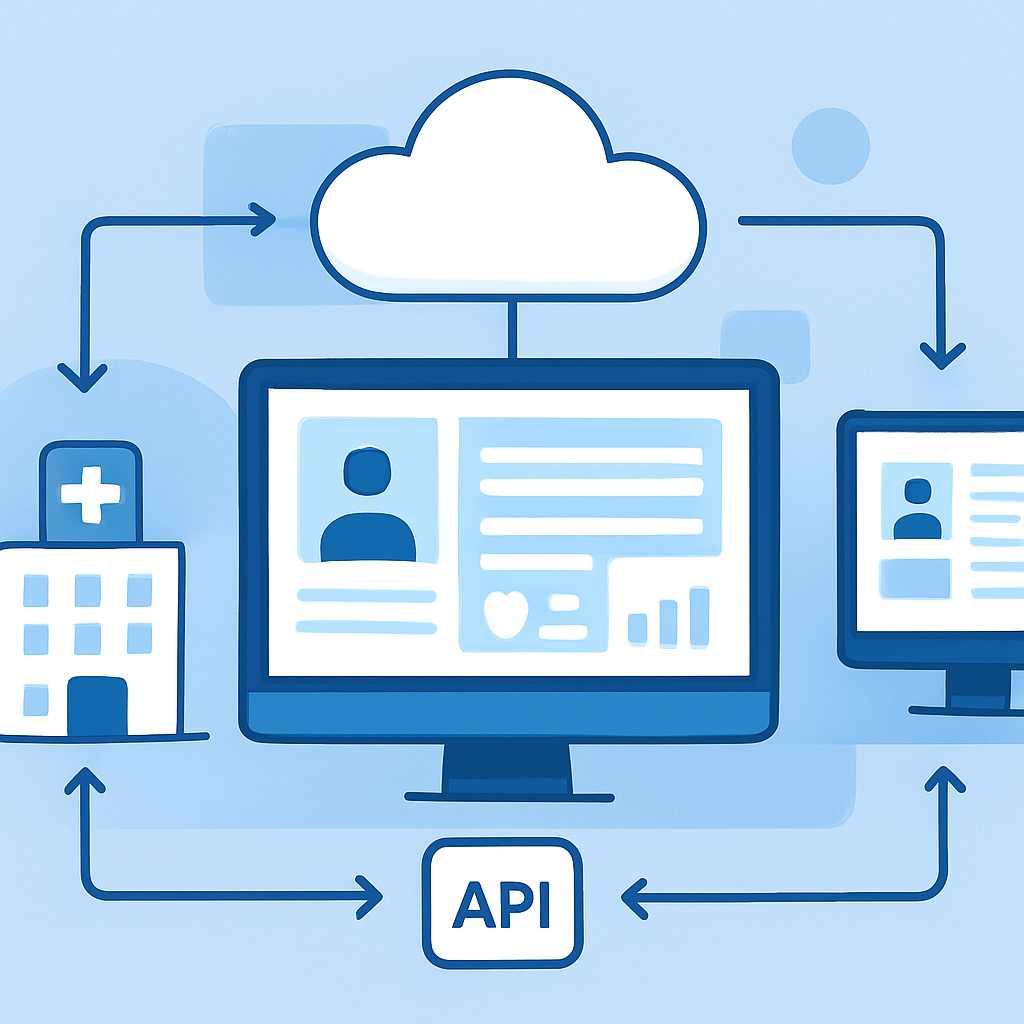
The Integration Nightmare
Ask any health system IT leader about AI vendor integrations, and you'll hear war stories. Implementations that were supposed to take 3 months stretch to 18. Data mapping exercises consume hundreds of hours. Go-lives get pushed back repeatedly.
This integration burden is the primary barrier to healthcare AI adoption. Great technology means nothing if it can't be deployed practically.
Why Healthcare AI Integration is Hard
Data Fragmentation
Patient data lives in multiple systems:
Many AI solutions require data aggregation across these sources, creating complex data pipelines that are difficult to build and maintain.
Standardization Gaps
Even within EHRs, data representation varies:
Workflow Integration
Getting data into an AI system is only half the battle. Results must flow back into clinical workflows:
Each integration point requires IT resources and clinical change management.
The Marqi Index Approach
We designed Marqi Index from the ground up for rapid deployment:
Structured Data Only
Marqi Index uses only structured data elements that exist in every major EHR:
No natural language processing. No manual chart abstraction. No special documentation requirements.
Flexible Data Ingestion
We support multiple integration patterns:
HL7 ADT/ORU feeds: Real-time admission notifications and lab results via standard HL7 v2 messages most health systems already produce.
FHIR API: Modern RESTful API integration for health systems with FHIR infrastructure.
Flat file batch: Nightly CSV/delimited file transfers for health systems that prefer batch processing.
Pre-Built EHR Integrations
For Epic environments, we offer:
For Cerner/Oracle Health:
Standard Integration Timeline
| Phase | Duration | Activities |
|-------|----------|------------|
| Technical Discovery | 1 week | Data mapping, integration planning |
| Build & Test | 2-3 weeks | Interface development, validation |
| User Training | 1 week | Workflow training, go-live prep |
| Go-Live | 1 day | Production deployment |
Total: 4-6 weeks from kickoff to production
What We Don't Require
Many AI vendors create integration burden through requirements we've intentionally avoided:
No additional documentation: Care teams don't need to fill out extra forms or answer additional questions.
No new hardware: Cloud-based processing means no on-premises infrastructure.
No data warehouse build: We work with source systems directly.
No complex data mapping: Standardized input specifications make mapping straightforward.
Post-Go-Live Support
Integration doesn't end at deployment:
Performance monitoring: Ongoing validation that predictions match observed outcomes.
Drift detection: Alerts if model performance degrades over time.
Refresh cycles: Regular model updates incorporating the latest evidence.
Technical support: Dedicated integration engineers for issue resolution.
Conclusion
Healthcare AI integration doesn't have to be a nightmare. By designing for interoperability from the start—using structured data, supporting standard interfaces, and providing pre-built integrations—we've reduced typical deployment timelines from months to weeks.
If you've been burned by lengthy AI implementations in the past, we understand the skepticism. We're happy to share reference timelines from recent deployments and connect you with IT leaders at similar health systems who can speak to their experience.
The goal is validated risk prediction in your clinical workflows, not an endless implementation project.